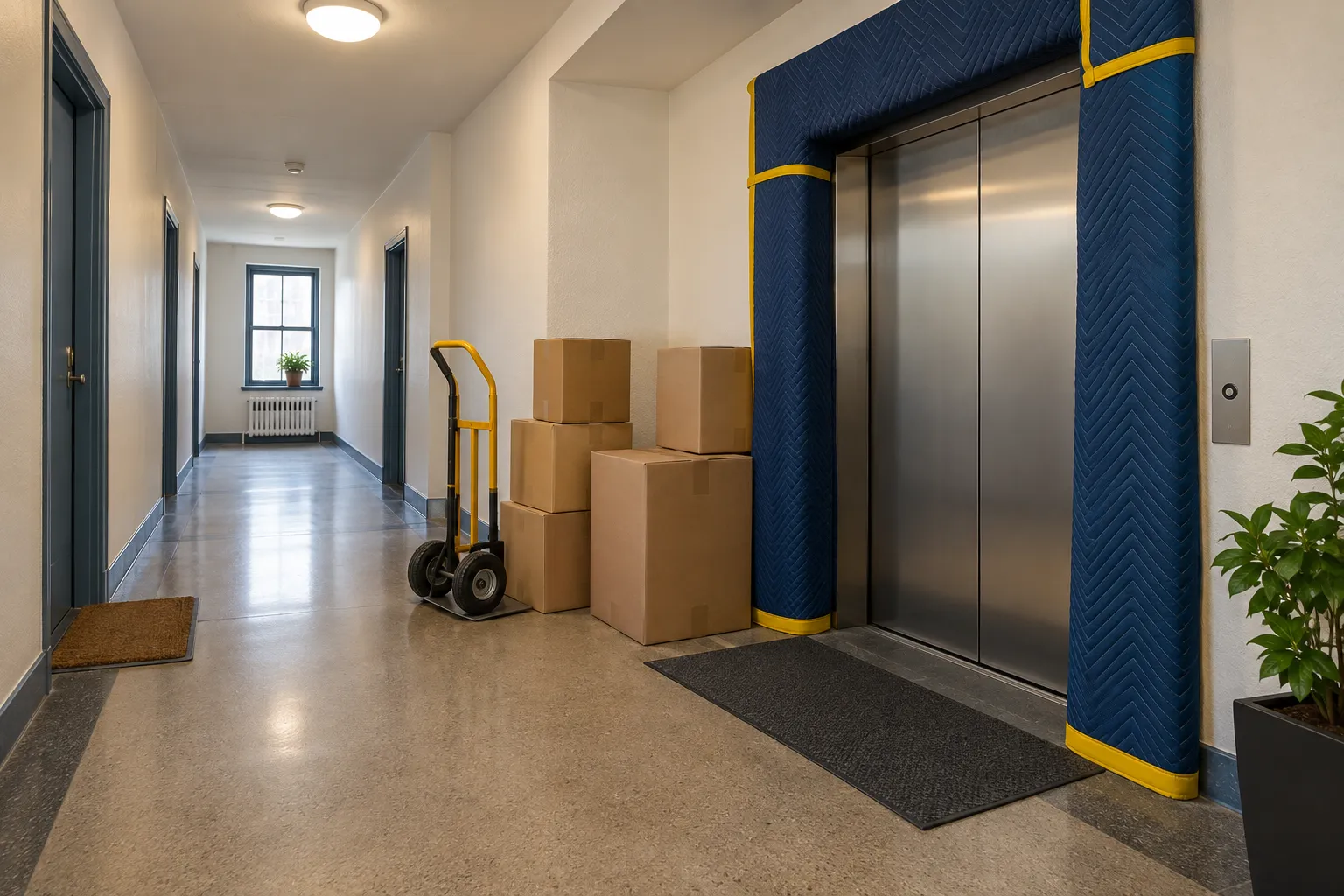
Apartment cleanouts go smoothly when the route is approved before anyone lifts a box. Confirm the building’s service hours, elevator process, loading location, protective-material rules, and insurance requirements. Then walk the full path from the farthest room to the vehicle.
Ask management these questions
- Is a service elevator required, and must it be reserved?
- Which entrance and loading area should the crew use?
- Are there limits on weekday, evening, or weekend work?
- Does the building require a certificate of insurance or advance vendor approval?
- Who installs elevator padding or floor protection?
- May exterior doors be held open, and who controls access?
- Where may a vehicle stop without blocking residents, fire lanes, or deliveries?
Get the answers in writing when the building uses a portal, email approval, or move reservation. A verbal “it should be fine” can turn into a locked service door on the scheduled day.
Walk the route with a tape measure
Measure the narrowest doorway, elevator opening, cab depth, tightest turn, and any stair landing. Note self-closing doors, low fixtures, thresholds, floor transitions, and corners that need protection. The smallest point controls the route.
| Route point | Record | Why it matters |
|---|---|---|
| Unit doorway | Clear width and height | Handles, hinges, and trim reduce usable space. |
| Hallway turns | Width on both sides of the turn | Long furniture needs swing room. |
| Elevator | Door, cab, and reservation window | A piece can pass the door but still fail inside the cab. |
| Loading area | Distance, steps, and vehicle rules | Long carries and stairs change labor and timing. |
Protect residents and exits
Boxes and equipment should not wait in fire exits or block a shared hallway. Stage items inside the unit unless management has approved another place. Keep noise, door access, and elevator use within the building’s rules. If the route crosses a lobby or finished floor, confirm who supplies protection and who may install it.
Prepare the unit
Place keys, medication, documents, chargers, valuables, and anything moving with you in a closed room or locked vehicle. Use painter’s tape and a plain note for the no-remove area, but do not rely on labels alone. Walk the crew through what stays and what goes.
For a Lancaster apartment, send or call with the floor, elevator rules, largest item, walking distance, and approved service window. CleanSpace contact details are available without a form.